The paper De Novo Design of Miniature and Efficient Metallo-Ketoreductases was officially published online in the Journal of the American Chemical Society on May 20, 2026. This study presents a deep learning-guided workflow for the de novo design of metallo-ketoreductases, starting from a theoretical active site, to achieve the asymmetric reduction of ketones via an abiotic hydride transfer mechanism. The resulting miniature enzyme, comprising only 130 amino acids (13.8 kDa), exhibits remarkable catalytic performance: a kcat/kuncat of up to 1.4×10⁶, a turnover number (TON) of up to 19,000, and an enantiomeric excess (e.e.) of up to 98%, alongside a broad substrate scope and excellent regioselectivity. Notably, the enzyme displays exceptional thermostability upon exposure to temperatures up to 90 °C and robust tolerance to various organic solvents, surpassing natural promiscuous reductases. This work demonstrates the powerful capability of de novo design for creating non-natural catalytic functions and offers a scalable, sustainable route to custom-designed biocatalysts for asymmetric synthesis.
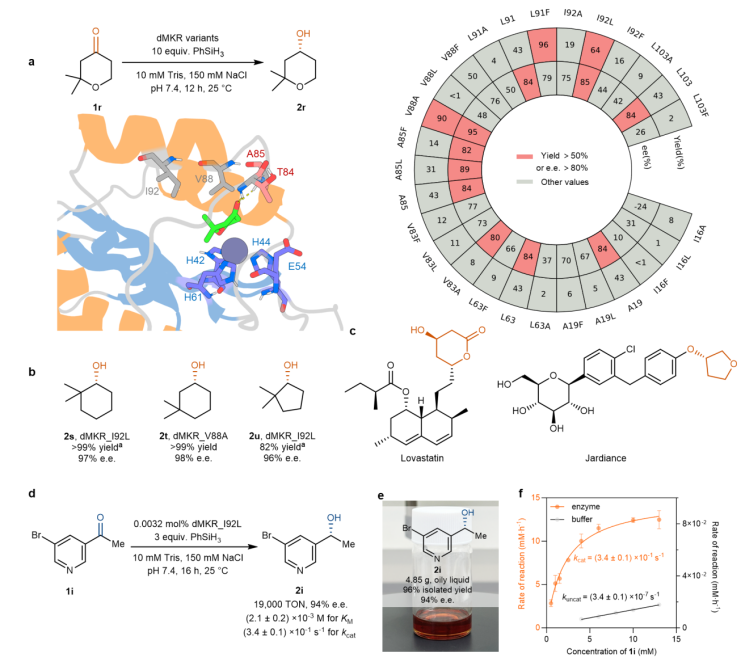
Figure 1. Computational design strategy and initial screening.
This study employed the theoretical active site of native human carbonic anhydrase II (hCAII, 260 amino acids) as a blueprint. The design was centered around the Zn²⁺-coordinating residues His94/His96/His119, Glu106 (responsible for electrostatic stabilization and activation of the Zn-bound water), and Thr199 (forming the oxyanion hole) to construct a smaller, more stable artificial metallo-ketoreductase. Based on a QM/MM model of the hCAII–zinc hydride–acetophenone complex, the team utilized RFDiffusionAA to generate 8,000 de novo α/β mixed scaffolds of fewer than 155 residues. This was followed by multiple rounds of sequence and active-site optimization using algorithms including ProteinMPNN, AlphaFold2, RIFDock, Metal3D, and Rosetta. This process yielded 91 high-quality designs, clustered into 7 families, from which 52 representative designs were selected for experimental validation. Whole-cell catalysis assays demonstrated that the majority of designs could catalyze the asymmetric reduction of acetophenone with distinct enantioselectivities. The best performer, dMKR, achieved up to 98% conversion and 97% e.e., while other designs favored the production of the opposite enantiomer. The experimental results were in excellent agreement with the stereochemical preferences predicted by the design models, confirming that this workflow not only enables the construction of highly efficient artificial metallo-ketoreductases but also allows for the pre-encoding and realization of specific stereoselectivities at the design stage (Figure 1).
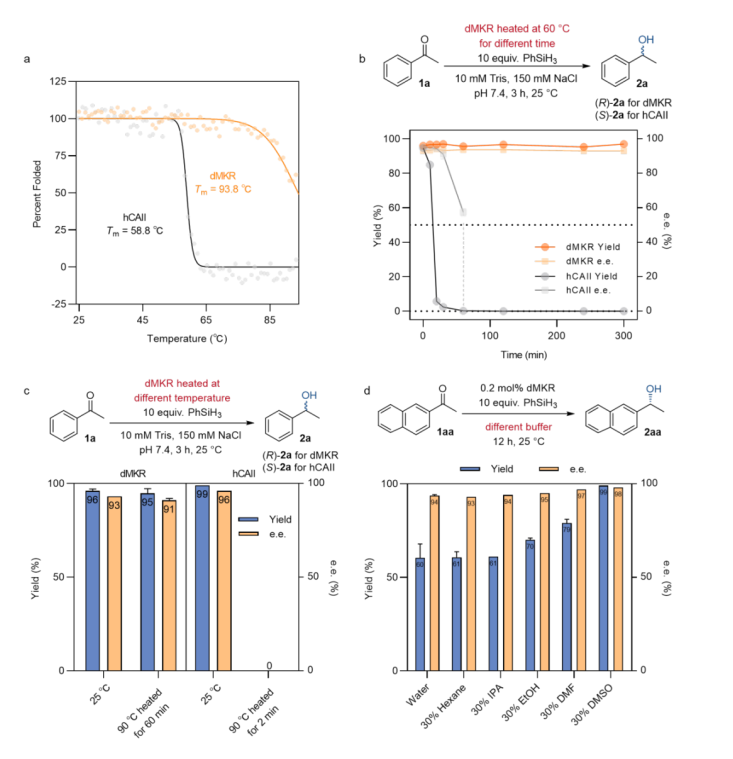
Figure 2. Thermostability and organic solvent tolerance.
Circular dichroism spectroscopy revealed that dMKR maintains a stable α/β structure from 25 °C to 80 °C, with a melting temperature (Tm) of 94 °C, significantly higher than that of native hCAII (59 °C). After heating at 60 °C for 5 hours, dMKR retained 96% conversion and 94% e.e.; even after heating at 90 °C for 60 minutes, it maintained 95% conversion and 91% e.e., whereas hCAII was completely inactivated after 2 minutes at 90 °C. Leveraging this high thermostability, the enzyme could be purified in a single step by heating the wet cell lysate at 80 °C for 10 minutes. In the presence of 30% (v/v) organic co-solvents such as 1,4-dioxane, DMSO, DMF, isopropanol, ethanol, and n-hexane, dMKR maintained excellent conversion and e.e., demonstrating remarkable solvent tolerance (with >99% conversion and 98% e.e. in DMSO) (Figure 2).
Deuterium labeling experiments confirmed that the hydride source originated from the silane, not the solvent. The consistent e.e. values obtained with different silanes support a zinc-hydride intermediate mechanism rather than direct silane insertion. Alanine-scanning mutagenesis revealed that mutation of the Zn²⁺-coordinating residues (His42/His44/His61) nearly abolished activity; mutation of Glu54 reduced activity and inverted product configuration; while mutation of Thr84 slightly lowered conversion but did not affect e.e. Removal of Zn²⁺ resulted in complete loss of activity, which could be restored by re-addition of Zn²⁺, with a measured dissociation constant (Kd) of 0.87 µM. Supplementation with other metal ions (Mn²⁺, Fe²⁺, Co²⁺, Ni²⁺, Cu²⁺) resulted in only partial activity retention. These results collectively confirm that dMKR is a Zn²⁺-dependent metalloenzyme operating via a zinc-hydride mechanism.
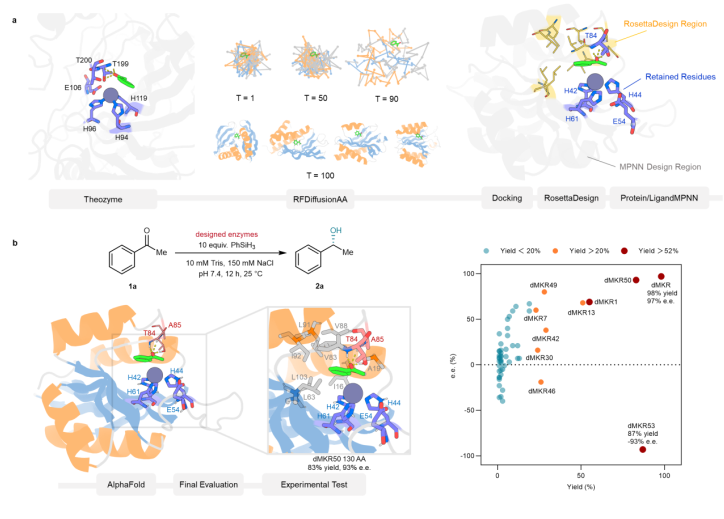
Figure 3. Directed evolution and activity assays.
dMKR efficiently reduced a panel of 16 aryl, heteroaryl, dialkyl, and cycloalkyl ketones, achieving conversions of up to 99% and e.e. >90%. For the challenging diketone substrate 1-phenyl-1,3-butanedione, dMKR selectively reduced the carbonyl adjacent to the phenyl ring with 85% conversion and 95% e.e., showcasing excellent regio- and stereoselectivity. Using the FRISM strategy for directed evolution, variants dMKR_V88A and dMKR_I92L were obtained, which exhibited significantly improved conversion and e.e. toward cyclic ketones such as tetralone, further expanding the substrate scope (Figure 3).
In conclusion, this study successfully employed a deep learning-based approach for the de novo design of highly efficient miniature metallo-ketoreductases. These enzymes possess ultra-high thermostability (=94 °C), organic solvent tolerance, a broad substrate scope, and precise stereo- and regioselectivity. Notably, 70% (36/52) of the tested designed sequences exhibited detectable activity and enantioselectivity, underscoring the high success rate of the computational design. This work establishes a new paradigm for constructing oxidoreductases with an abiotic metal-hydride mechanism, holding significant promise for applications in industrial biocatalysis.
Professor Pengfei Ji at Zhejiang University is the corresponding author of this work. Ph.D. students Yiling Xu and Yunhao Li are the co-first authors. This research was supported by the National Natural Science Foundation of China and the National Key Research and Development Program, among other funding sources, and received strong support from Zhejiang University, the Department of Chemistry, and the Institute of Catalysis at Zhejiang University.
About the Principal Investigator:
Pengfei Ji's research focuses on the rational design of enzymes and their catalytic applications. He received his B.S. from Sichuan University in 2014 and his Ph.D. in Chemistry from the University of Chicago in 2018 under the supervision of Professor Wenbin Lin. From 2019 to 2020, he conducted postdoctoral research as a Miller Fellow at the University of California, Berkeley, with Professor John Hartwig. From March to August 2025, he was a Visiting Scholar at the University of Washington, collaborating with Nobel Laureate Professor David Baker. Since December 2020, he has been a Hundred Talents Program Professor at Zhejiang University. He has published over 30 papers in journals including Nat. Chem., Nat. Synth., JACS, and Nat. Commun., and holds 3 international patents.
Group/PI homepage: https://person.zju.edu.cn/jipengfei
Original article: https://pubs.acs.org/doi/full/10.1021/jacs.6c00732