The carbon–hydrogen (C–H) bond represents the most fundamental and ubiquitous chemical bond in organic molecules. Achieving selective functionalization of C–H bonds to directly convert simple hydrocarbons into high-value-added complex molecules remains a longstanding and central challenge in synthetic organic chemistry. Research in this area not only drives fundamental scientific breakthroughs but also holds profound practical implications for drug discovery, materials science, and sustainable chemical manufacturing.
Selectivity embodies the essence of a chemist's practical wisdom and serves as a fundamental metric for assessing the feasibility and utility of a chemical transformation. Throughout the history of chemistry, from early serendipitous discoveries to modern, purpose-driven design, selectivity has been a defining and recurring theme, propelling human understanding and practice to ever-higher levels of sophistication in a continuous cycle of learning and innovation.
In the realm of precise C–H bond functionalization, aromatic C(sp²)–H bonds, facilitated by their rigid planar structures and the assistance of directing groups, have witnessed remarkable breakthroughs in recent years, enabling the precise modification of remote, specific positions. However, aliphatic C(sp³)–H bonds possess higher bond dissociation energies (BDEs) and often feature numerous C–H sites with highly similar chemical environments (e.g., multiple methyl and methylene groups). Consequently, the precise identification and functionalization of a specific C–H bond among these remains a largely undeveloped area (Figure 1A). We note that strategies leveraging the unique attributes of radical chemistry, such as directed sampling and head-to-tail carboboration, have enabled effective differentiation between methyl and methylene groups in aliphatic systems (see pioneering work from the Aggarwal group at the University of Bristol: Nature2020, *586*, 714; the Hu group at Sun Yat-sen University: Science2024, *383*, 537; and the Yin group at Wuhan University: Nat. Chem.2025, *17*, 1768). Nevertheless, a general paradigm for distinguishing between multiple similar inert methyl C(sp³)–H bonds remains elusive.
Recently, the research group led by Professor Zhan Lu at our department reported a groundbreaking study in Science Advances (Sci. Adv.2026, *12*, eaed6913, DOI: 10.1126/sciadv.aed6913). The team has developed a novel directed chain-walking borylation strategy (Figure 1B). Through the design of desymmetrized ligands, this approach achieves simultaneous control over five key parameters—activity, yield, chemoselectivity, site-selectivity, and regioselectivity—in the remote borylation of inert methyl C(sp³)–H bonds. This contrasts with traditional symmetric ligands, which typically offer only singular functions. Furthermore, this strategy surpasses previous records for chain migration, and the resulting Y-shaped organoboron products offer new synthetic avenues for interdisciplinary fields such as flexible electronics and heterojunction plastics (Figure 1C).
Desymmetrized Ligand Design: To address the challenge of simultaneously controlling multiple reaction parameters in complex systems, the team deconstructed and recombined classic symmetric ligand scaffolds (Pybox, PDI, Tpy), proposing a desymmetrization concept. This led to the integration of oxazoline, imine, and pyridine units into a novel framework. Through screening, an imine-bipyridine (ImBPy) scaffold complexed with cobalt exhibited superior performance. Further introduction of bulky substituents (e.g., 2,4,6-tricyclohexyl) on the imine side chain resulted in all selectivity parameters (chemical, site, and regio) exceeding 95/5. Notably, the combined use of two classical symmetric ligands (PDI and Tpy) led to a loss of selectivity, whereas the desymmetrized ImBPy ligand demonstrated a unique ability to cooperatively modulate activity and selectivity, highlighting its advantage.
Ultra-Long Chain Migration: To probe the upper limit of the chain-walking capability of this catalytic system, the team designed a substrate containing an alkyl chain of 32 carbon atoms. Under standard conditions at room temperature with 2 mol% catalyst loading, this substrate was smoothly converted to the desired product in 95% yield, with all selectivity parameters exceeding 95/5. This implies that the cobalt hydride species underwent approximately 30 consecutive reversible β-H elimination and reinsertion steps along the C32 alkyl chain, ultimately achieving precise borylation at the terminal methyl group. To the best of our knowledge, this represents the longest continuous chain-walking reaction reported to date (Figure 2).
Precise Functionalization of Similar Methyl C(sp³)–H Bonds: Leveraging the consistent migration direction of the alkene during this reaction, the team explored its potential for precisely editing methyl C(sp³)–H bonds with similar BDEs. BDE is a thermodynamic parameter measuring C–H bond strength; it is generally recognized that C–H bonds with BDE differences of less than 1–2 kcal/mol are challenging to distinguish via conventional radical or metal-insertion methods. The present strategy does not rely on differences in C–H bond strength but rather on the geometric configuration of the alkene precursor and the kinetic pathway control during chain walking. As illustrated, the BDEs for the methyl C(sp³)–H bonds H¹, H², and H³ in the substrate are 99.6, 98.9, and 99.7 kcal/mol, respectively, with a maximum difference of only 0.8 kcal/mol—making them nearly indistinguishable thermodynamically (BDEs predicted using computational software developed by the Luo Sanzhong group: Chin. J. Chem.2024, *42*, 1967). However, by simply selecting the appropriate alkene precursor (e.g., prepared via Wittig reaction from 3-heptanone, 5-nonanone, or 3-octanone), the H¹, H², or H³ sites could be selectively borylated on a gram scale with 0.5 mol% catalyst. Single-crystal structures, obtained using supramolecular docking techniques (from the Huang Feihe group, Nature2025, *640*, 676), confirmed the precise connectivity of the products (Figure 3).
Chiral Recognition: Differentiating Methyl and Ethyl Groups: In organic chemistry, distinguishing between two minimally different alkyl substituents, such as methyl and ethyl, is a formidable challenge. Due to the negligible differences in steric and electronic properties between methyl and ethyl groups, conventional methods struggle to achieve selective recognition. In this study, through further modification of the ligand, the team successfully achieved differentiation between methyl and ethyl groups in fully aliphatic, non-directed commercial substrates. Under optimized conditions, the target product was obtained in 97% yield, with both site- and regio-selectivity exceeding 95/5, and an enantiomeric ratio of 90/10. This result provides a new conceptual framework for the asymmetric functionalization of non-directed, unactivated alkanes (Figure 4).
Catalytic Cycle: The cobalt precatalyst is reduced by KBHEt₃, and the imine unit undergoes single-electron reduction to form an anion exhibiting a persistent radical effect (PRE), as detailed in our previous work (J. Am. Chem. Soc.2024, *146*, 21089), thereby prolonging the lifetime of the active species. The cobalt hydride species undergoes exclusive 2,1-insertion with the alkene. Subsequent, continuous reversible β-H elimination/reinsertion (chain walking) translocates the cobalt center to the chain terminus, where an irreversible σ-bond metathesis with the borane occurs. This yields the Y-shaped boronate ester product and regenerates the cobalt hydride species. The combination of the desymmetrized ligand and the PRE ensures intermediate stability, enabling highly efficient and selective directed chain-walking borylation.
The first author of this work is Yinwei Bao (a Master's-to-Ph.D. student, enrolled 2024) from the Department of Chemistry, Zhejiang University. The corresponding author is Professor Zhan Lu. Department members Chenke Hu (undergraduate student, enrolled 2022), Lixuan Zheng (Ph.D. student, enrolled 2025), and Professor Feihe Huang and his postdoctoral fellow Yitao Wu from Zhejiang University are acknowledged for their diligent efforts and valuable guidance. This research was generously supported by the National Key Research and Development Program of China, the National Natural Science Foundation of China, the Zhejiang Provincial Natural Science Foundation, the Center for Chemistry of High-Performance & Novel Materials at Zhejiang University, the State Key Laboratory of Soil Pollution Control and Safety at Zhejiang University, and the State Key Laboratory of Coordination Chemistry at Nanjing University.
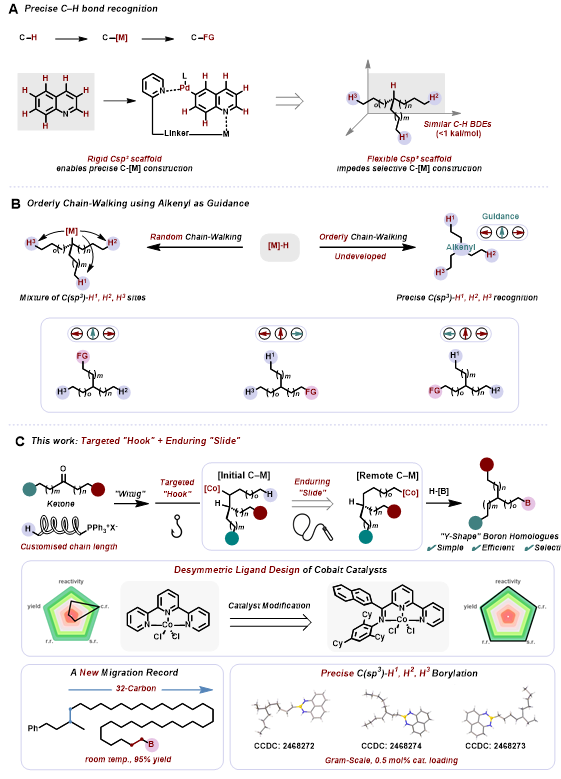
Figure 1. Background and summary of this work. (Image credit: Science Advances)
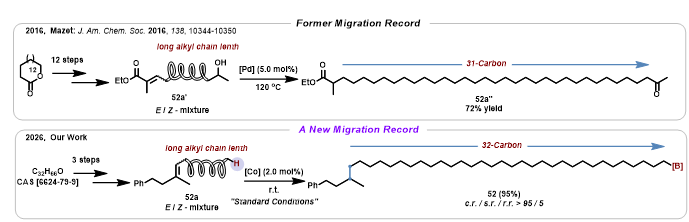
Figure 2. A new record in the field of chain migration. (Image credit: Science Advances)
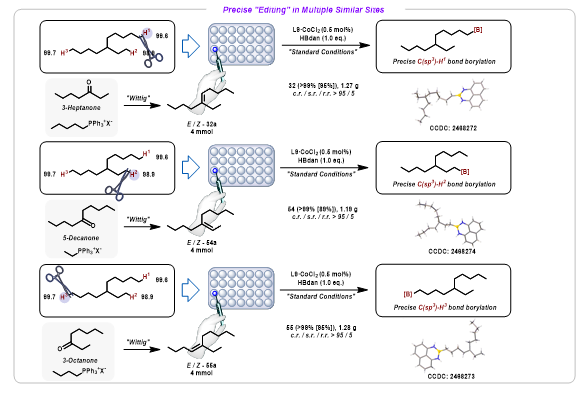
Figure 3. Precise functionalization of similar methyl C(sp³)–H bonds. (Image credit: Science Advances)
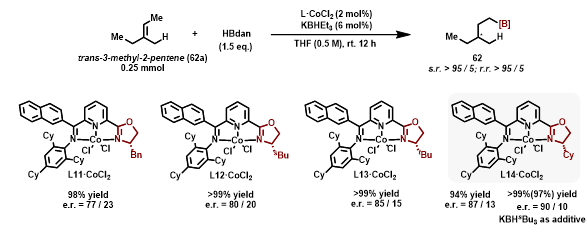
Figure 4. Chiral recognition: differentiating methyl and ethyl groups. (Image credit: Science Advances)
About the Corresponding Author:
Professor Zhan Lu is a professor at Zhejiang University. He earned his Ph.D. from the Department of Chemistry at Zhejiang University in 2008 and subsequently conducted postdoctoral research at the University of Wisconsin–Madison. In late 2012, he joined the faculty of the Department of Chemistry at Zhejiang University as a specially appointed researcher and was promoted to full professor in 2018. His research interests primarily focus on highly selective catalysis using low-valent iron-group metals based on chiral ligand design, as well as visible-light-driven photocatalytic reactions. Professor Lu has published over 130 papers in prestigious international journals such as Nat. Catal., Chem, Sci. Adv., J. Am. Chem. Soc., Angew. Chem. Int. Ed., and Nat. Commun., which have been cited over 9,000 times. He has also authored six book chapters and been granted more than 20 Chinese invention patents, with some of his ligands commercialized by several companies. He has received funding from the National High-Level Talent Youth Program and the National Natural Science Foundation of China (Projects A and B).
Original article: Precise Borylation of Targeted Methyl Group via an Orderly Chain-Walking Strategy. Yinwei Bao, Chenke Hu, Lixuan Zheng, Yitao Wu, Feihe Huang, Zhan Lu*, Sci. Adv.2026, *12*, eaed6913, DOI: 10.1126/sciadv.aed6913.
Group/PI homepage: https://person.zju.edu.cn/lu