The selective oxidation of alkanes using alkyl hydroperoxides (ROOH) is a common transformation; however, its mechanistic intricacies remain insufficiently elucidated. Specifically, in copper-catalyzed C(sp³)–H bond oxidation, a critical question persists: is it the alkylperoxy radical (ROO•) or the alkoxy radical (RO•) that abstracts the hydrogen atom in the hydrogen atom transfer (HAT) step?
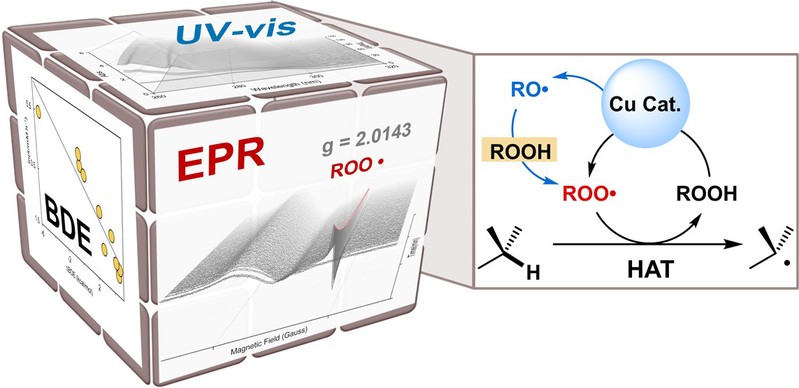
Figure 1: Investigation of the mechanism of Cu-catalyzed C(sp³)–H bond oxidation using the External Circulation Online Multi-Spectroscopic System (ECOMS).
Recently, the team of Professor Haoran Li and Associate Professor Yongtao Wang from the Center for Chemistry of High-Performance & Novel Materials at our department has addressed this pivotal question, leveraging their previously developed External Circulation Online Multi-Spectroscopic System (ECOMS, Adv. Sci.2024, *11*, 2402890, Figure 1). The distinctive capability of this system lies in its provision of real-time electronic spin (via electron paramagnetic resonance, EPR), electronic transition (UV-vis spectroscopy), and molecular structural information (near-infrared spectroscopy) for homogeneous catalysts and all reaction components—particularly reactive intermediates. Crucially, it further tracks the temporal evolution of these spectroscopic signatures and elucidates the logical correlations among them. Unlike conventional in situ techniques that employ a reaction cell with multiple probes, ECOMS draws inspiration from industrial oxidation reactors, which frequently utilize external circulation for simultaneous heat removal and mixing, thereby enabling multi-spectroscopic monitoring through an external loop.
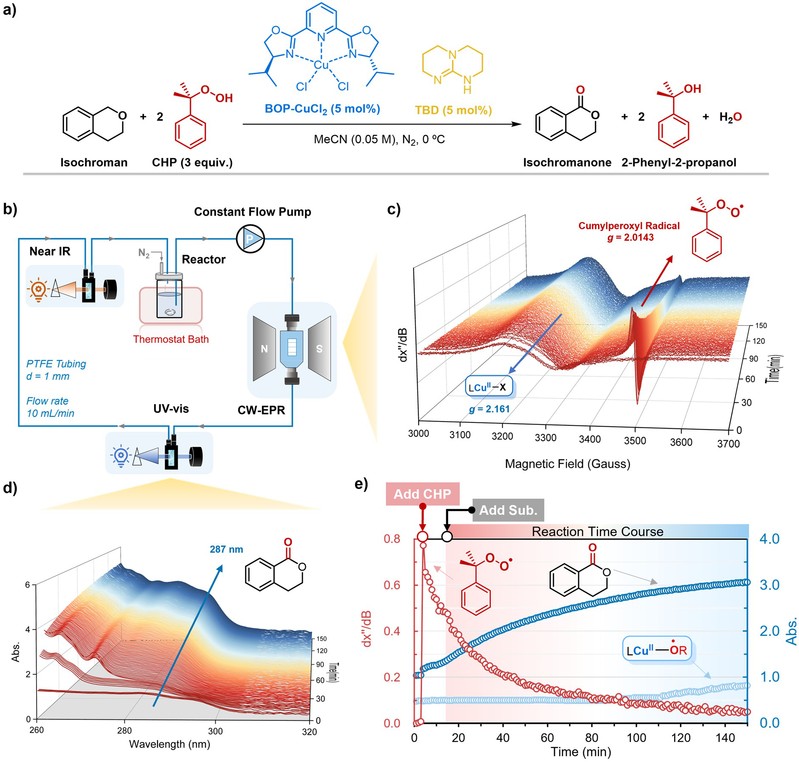
Figure 2: Schematic of the External Circulation Online Multi-Spectroscopic System (ECOMS) and time-resolved spectroscopic signal evolution analysis for multiple species.
This work systematically investigated the radical mechanism of benzylic C(sp³)–H oxidation using cumene hydroperoxide (CHP) as the oxidant. ECOMS enabled the direct, quantitative monitoring of the cumylperoxy radical (CumylOO•) generated from CHP throughout the entire reaction course. By correlating the temporal evolution of this radical species with that of the reaction products on a unified timescale, the study unequivocally identified CumylOO• as the key radical responsible for the HAT step (Figure 2).
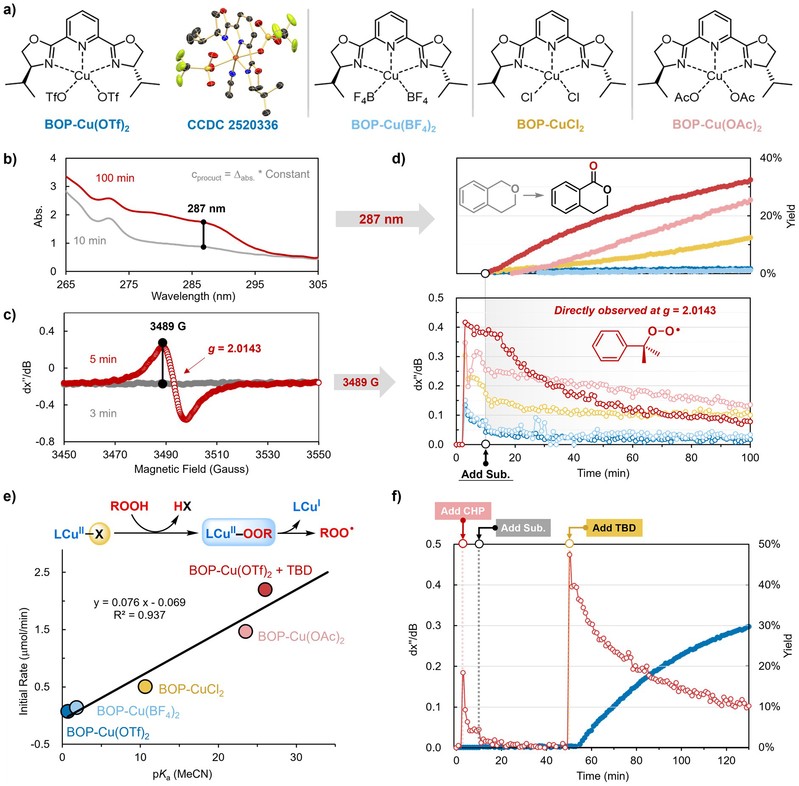
Figure 3: Reaction activity modulated by the basicity of the copper catalyst anion and online spectroscopic evidence.
Building on this finding, the work further revealed a pronounced influence of the catalyst anion basicity on the reaction rate (Figure 3). By systematically varying the anion in the copper complex (OTf⁻, BF₄⁻, Cl⁻, OAc⁻), it was observed that increased anion basicity led to a higher steady-state concentration of CumylOO• in the system, concomitant with a substantially accelerated reaction rate. Importantly, a linear correlation was established between the pKa values of the conjugate acids of the catalyst anions and the observed reaction rates, providing robust experimental support for the involvement of ROO• in the HAT process. This basicity effect also rationalizes the significant promotional role of the guanidine cocatalyst TBD in this reaction.
Furthermore, the study employed density functional theory (DFT) calculations to systematically compare the various radical pathways potentially operative in the reaction. The computational results indicate that, although the alkoxy radical (RO•) is thermodynamically more potent in hydrogen abstraction, it is kinetically and thermodynamically predisposed to react with the peroxide ROOH in the vicinity of the metal center, generating the peroxy radical ROO•. Subsequently, ROO• performs the HAT from the benzylic C–H bond of the substrate in the bulk solution, thus establishing itself as the true active radical executing the HAT step (Figure 4). This mechanistic proposal satisfactorily accounts for the observed kinetic behavior in the experiments.
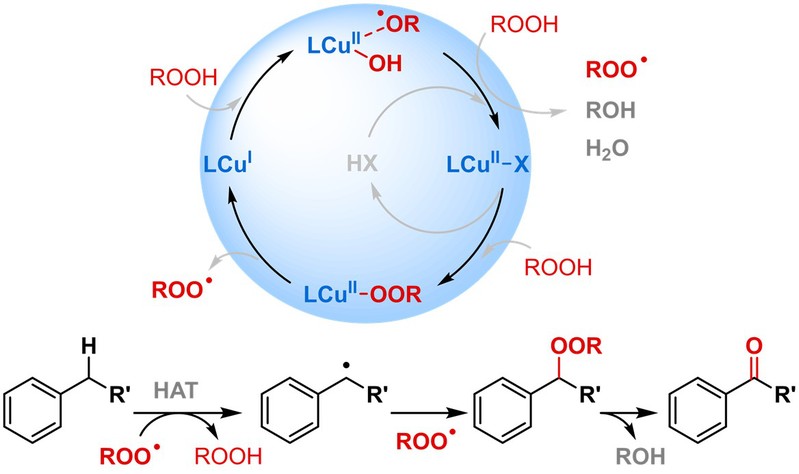
Figure 4: Proposed reaction mechanism for the Cu-catalyzed benzylic C(sp³)–H oxidation by ROOH.
This research not only resolves the long-standing question regarding the true hydrogen-abstracting radical in copper-catalyzed C–H oxidation by alkyl peroxides but also vividly demonstrates the substantial potential of ECOMS for investigating complex radical reactions. The system is currently under further development, and the team welcomes collaboration with interested research groups to refine and expand its capabilities.
The results have been published in the Journal of the American Chemical Society. The first authors are Ph.D. candidate Yujia Zhou and Associate Professor Yongtao Wang, and the corresponding authors are Professor Haoran Li and Associate Professor Yongtao Wang. This work was supported by the National Key Research and Development Program of China (2022YFA1503200), the National Natural Science Foundation of China (22303079), and the Analytical and Testing Platform of the Department of Chemistry, Zhejiang University.
Original article: https://pubs.acs.org/doi/10.1021/jacs.6c01241
Title: Which Radical Abstracts Hydrogen Atom? Alkylperoxy versus Alkoxy in Cu-Catalyzed Benzylic C–H Oxidation
Authors: Yujia Zhou, Yongtao Wang,* Xinyu Wang, Jianzhang Pan, Jia Yao, Haoran Li*
About the Principal Investigator:
Professor Haoran Li is a Qiushi Distinguished Professor at the Department of Chemistry, Zhejiang University, and a Special-grade Expert of Zhejiang Province. He currently serves as a Council Member of the Chinese Chemical Society and President of the Zhejiang Chemical Society. His research primarily focuses on green chemistry and the industrialization of vitamins and fragrances, encompassing process development, mechanistic and kinetic studies, catalyst and reactor design for aerobic oxidation reactions. His achievements in industrial applications have been honored with the second-class National Technological Invention Award.
Group/PI homepage: https://person.zju.edu.cn/0095075